
When Quiet Moments Speak Loudest: How Mounika Ravula Turned Life’s Subtlest Pauses Into a Powerful Debut Book
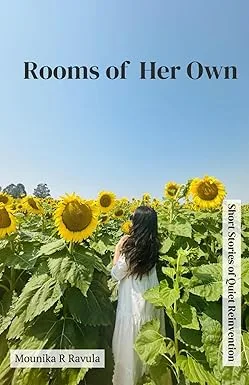
In a world that celebrates noise—breakthroughs, breakdowns, explosions of emotion, and grand cinematic epiphanies—one author dared to lean into the opposite. She chose stillness. She chose softness. She chose the quiet.
And from that quiet, she wrote a book that is now resonating loudly.
When Rava first sat down across from me, she carried the unhurried presence of someone who notices life differently. Not through big moments, but through the fleeting, easily missed, deeply human ones. Her debut book—a collection of 13 short stories about the small shifts that lead to big transformations—is rooted entirely in this philosophy.
Yet Rava never imagined she’d become an author at all.
From Consultant to Chronicler of Quiet Change
Before the book, there was a busy career. Seven years in strategic development and partnerships at a global consultancy in Mississauga. Teams across continents. Training programs. Travel. A life with direction, but no plans of writing.
A move to the U.S. after marriage didn’t change that. What did spark something, unexpectedly, was a gentle nudge—almost a joke—from her husband, after he caught her scrolling through the hundreds of notes she’d been quietly collecting for years. Little reflections. Nuanced observations. Emotional fragments. Moments she didn’t want to forget.
“You could make a book out of this,” he said casually.
He had no idea how seriously she’d take it.
The Seed Was Always There
Rava’s relationship with words began long before the corporate world. As a child growing up in a Telugu household filled with regional novels, she devoured books, wrote essays for school competitions, and spoke on stages in elocution contests. Slowly, adulthood buried that creative instinct—but not completely.
“It always comes back,” she said with a knowing smile. “Something from childhood always returns.”
These notes she had been secretly scribbling into her phone were, in many ways, a form of quiet journaling—her attempt to capture the beauty in subtle emotions, small realizations, and micro-moments of clarity that most people rush past.
A Book Built From Observing Life’s Softest Turning Points
What makes her stories so unique is not their plot, but their tone. Each story follows a woman at a different life stage, confronting a moment that doesn’t erupt—but instead unfolds. No melodrama. No explosive transformation arcs. Just honest human experience.
“Everything doesn’t have to be loud,” she said.
“Sometimes change happens in silence. Sometimes the smallest pause alters everything.”
Her protagonists, though fictional, carry pieces of her—fragments of thought, emotion, hesitation, wonder. Not autobiographical, but touched by lived truth.
Almost like each story holds a different version of her.
Four Years of Notes, One Year of Writing
Turning those observations into actual stories was its own journey.
Expanding the thoughts came naturally. Connecting them into cohesive narratives did not.
“It wasn’t about writing quickly,” she said. “It was about writing honestly.”
It took her nearly a year—mostly because she refused to rush into the next story until the previous one felt complete. She also made a rare choice for writers today: she stayed away from AI entirely.
Every story was handwritten, rethought, rewritten, edited manually, shaped by intuition rather than algorithms. A friend—an avid reader—helped review countless drafts, gently guiding her when a paragraph drifted too far or a transition felt abrupt.
It was slow. Intentional. Cathartic.
Healing Through Words—Quietly, of Course
Writing these stories didn’t heal her from heartbreak or tragedy—but from something subtler: the chaos of modern life, the speed of our days, and the way we forget to listen to ourselves.
“Healing doesn’t have to be dramatic,” she said softly. “Joy doesn’t have to be loud.”
And her book, much like its author, carries this truth elegantly.
The Power of Publishing the Quiet
After collecting notes for nearly four years, she finally decided it was time to put a full stop to the project—not because she ran out of ideas, but because she realized she could keep writing forever.
“I had to publish it so I could move forward,” she said.
And she did.
What started as scattered notes in a phone became a complete literary work—one that invites readers of all ages and genders to slow down, pause, and see themselves in the gentle, formative moments that shape who we become.
Her stories don’t shout.
They don’t demand.
But they whisper truths that linger long after the final page.